



Things people might say that aren’t helpful when you are grieving

When someone we know is grieving, it’s natural to want to offer comfort and support. However, even with the best intentions, people can sometimes say things that are more hurtful than helpful. Be prepared. Try to be forgiving. Most people are just trying to help.


Read More

What You As a
Griever May Need

  • Listening more than speaking: Often, someone’s presence and willingness to listen are more comforting than any words.
  • Acknowledgement of your pain: Simple phrases like “I’m so sorry” or “This must be so difficult” can be very comforting.
  • Shared memories: Sharing fond memories can be a beautiful way to honor a loved one’s life. 
  • Offer of specific help: Instead of vague offers, an offer of concrete ways they can assist, like bringing meals or helping with errands.
  • Continue to check in: Grief doesn’t end after the funeral. Regular check-ins in the weeks and months that follow can be deeply appreciated.

The Power of
Written Words

Sometimes, finding the right words in the moment can be challenging. Writing a heartfelt note or card can be so comforting.

  • Writing a Sympathy Card
    A thoughtful sympathy card can provide lasting comfort to you when grieving. It allows you to revisit their support over and over again.
  • Using Poetry to Express Sympathy
    Poetry can often express complex emotions beautifully.

Conclusion: Compassion is Key

Remember, there’s no perfect thing someone can say when you are grieving. What matters most is their sincere compassion and willingness to be there for you. 

The presence, empathy, and willingness to listen can be the greatest comfort of all.

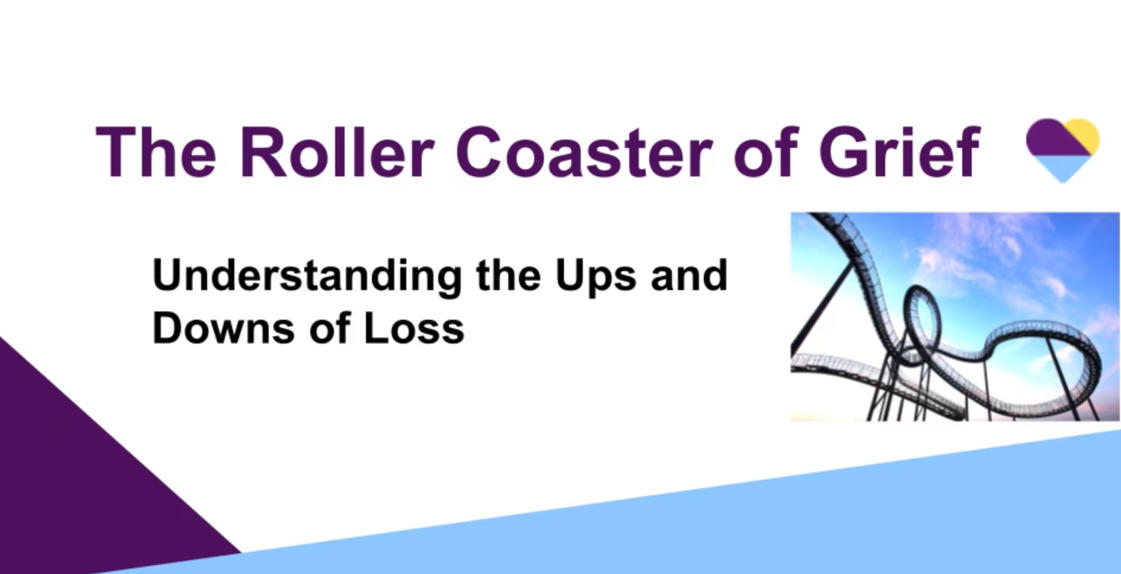
Roller Coaster Ride of Grief

Your Feedback is a Gift

Thank you for the privilege of caring for your loved one during their end-of-life journey. In about 8 weeks you will receive an experience of care survey from Strategic Healthcare Programs (SHP).  

We carefully review the results of the surveys to ensure we are continually striving to provide exceptional service and care to our patients and families.  It will mean a great deal to our organization if you would take the time to complete this survey when it arrives in the mail in an envelope like the picture below or via email from SHP.  

We are committed to providing the best quality hospice care available and your input will help us achieve this goal.  Thank you for your feedback.

 

To The Newly Bereaved

You Are Not Alone

When your loved one has died, suddenly it seems like all meaning has been drained from your life. When you wake in the morning, it’s difficult to get out of bed, much less live a “normal” life. All that was right with the world now seems wrong and you’re wondering when, or if, you’ll ever feel better.

We’ve been there ourselves and understand some of the pain you are feeling right now. We are truly glad that you have found us but profoundly saddened by the reason. We know that you are trying to find your way in a bewildering experience for which no one can truly be prepared.

When you’re newly bereaved, suddenly you find yourself on an emotional roller-coaster where you have no idea what to expect next. Here are thoughts on some of what you may be experiencing or feeling:

Psychological

  • Your memory has suddenly become clouded. You’re shrouded in forgetfulness. You’ll be driving down the road and not know where you are or remember where you’re going. As you walk, you may find yourself involved in “little accidents” because you’re in a haze.
  • You fear that you are going crazy.
  • You find there’s a videotape that constantly plays in an endless loop in your mind, running through what happened.
  • You find your belief system is shaken and you try to sort out what this means to your faith.
  • Placing impossible deadlines on yourself, you go back to work, but find that your mind wanders and it’s difficult to function efficiently or, some days, at all. Others wonder when you’ll be over “it,” not understanding that you’ll never be the same person you were before your loved one died—and the passage of time will not make you so.
  • You find yourself reading the same paragraph over and over again trying to understand what someone else has written.

Emotional

  • You find yourself filled with anger, whether it be at your partner, a person you believe is responsible for your loved one’s death, God, yourself, and even your loved one for dying.
  • You yearn to have five minutes, an hour, a day back with your loved one so you can tell them of your love or thoughts left unsaid.
  • Guilt may become a powerful companion as you may blame yourself. Rationally you know that you were not to blame—you most certainly would have saved your loved one if you’d been given the chance.
  • You feel great sadness and depression as you wrestle with the idea that something very important to you has been taken from you. Your immediate future is altered and nothing is making it right.

Physical

  • Either you can’t sleep at all or you sleep all the time. You feel physical exhaustion even when you have slept.
  • You no longer care about your health and taking care of yourself—it just doesn’t seem that important anymore.
  • You’re feeling anxiety and great discomfort—you may be told they’re panic attacks.
  • The tears come when you least expect them.
  • Your appetite is either gone or you find yourself overeating. 

Family & Social

  • If you have children, you find yourself suddenly overprotective, not wanting to allow them out of your sight. Yet you feel like a bad parent because it’s so difficult to focus on their needs when you’re hurting so bad yourself.
  • You find that your remaining family at home grieves the loss differently and you search for a common ground which seems difficult to find.
  • Old friends may seem to fade away as you learn they cannot comprehend the extent or length of your grief.
  • Things you liked to do which seemed so important before now seem meaningless.
  • Fleeting thoughts of pleasurable activities bring about feelings of guilt.
  • New friends come into your life who understand some of your grief because they’ve been there themselves.

Finding the “New Me”

When you’re newly bereaved, you don’t see how you can put one foot in front of the other, much less “recover” from this loss. You can’t see how you’ll ever find that elusive “closure” they talk of on TV—but eventually you will find the “new me.” You will never be the same person you were before your loved one died. It may be hard to believe now, but in time and with the hard work of grieving—and there’s no way around it— you will one day think about the good memories of when your loved one lived rather than the sad memories of when they died. You will even smile and, yes, laugh again someday—as hard to believe as that may seem.

When the newly bereaved connect with support groups you will be able to listen and learn from others who are further down the grief road than you. They will have made it through that first birthday, first death anniversary, first holiday, and so many other firsts that you have not yet reached. You will learn coping skills from other bereaved who, like you, never thought they’d survive. There are no strangers at support groups only friends you have not yet met.  

The Grief Support Team will be here as long as you need us. Even though you are newly bereaved and the road is long, we invite you to walk with us for as long as the journey takes.

The Carnation is a symbol of love,
gratitude and remembrance.

During times of loss, finding the right words can be difficult. The Carnation Foundation understands the pain that comes with losing a loved one, and we want you to know that we are here to support you through this challenging time. Our deepest condolences go out to you and your family. At The Carnation Foundation, we offer our heartfelt sympathy and want you to know that you are not alone in your grief. We are here to provide support as you navigate this difficult journey of healing. Please remember that it is okay to grieve, and it is important to take care of yourself during this time. Visit our website at www.carnationfoundation.org to learn more about what we offer. Remember, you are loved, and we are here for you every step of the way.


Visit the Carnation Foundation Website

With You Virtual Support Group

The With You Virtual Support Group meets the 3rd Tuesday of each month midday and in the evening via Zoom. 

Visit our Grief Page for information on in-person groups and grief events in your local area.

Connecting with others who understand the pain of loss can be incredibly reassuring, helping individuals move forward with a sense of community and support. 

“With You” Online Grief Support Group Schedule